
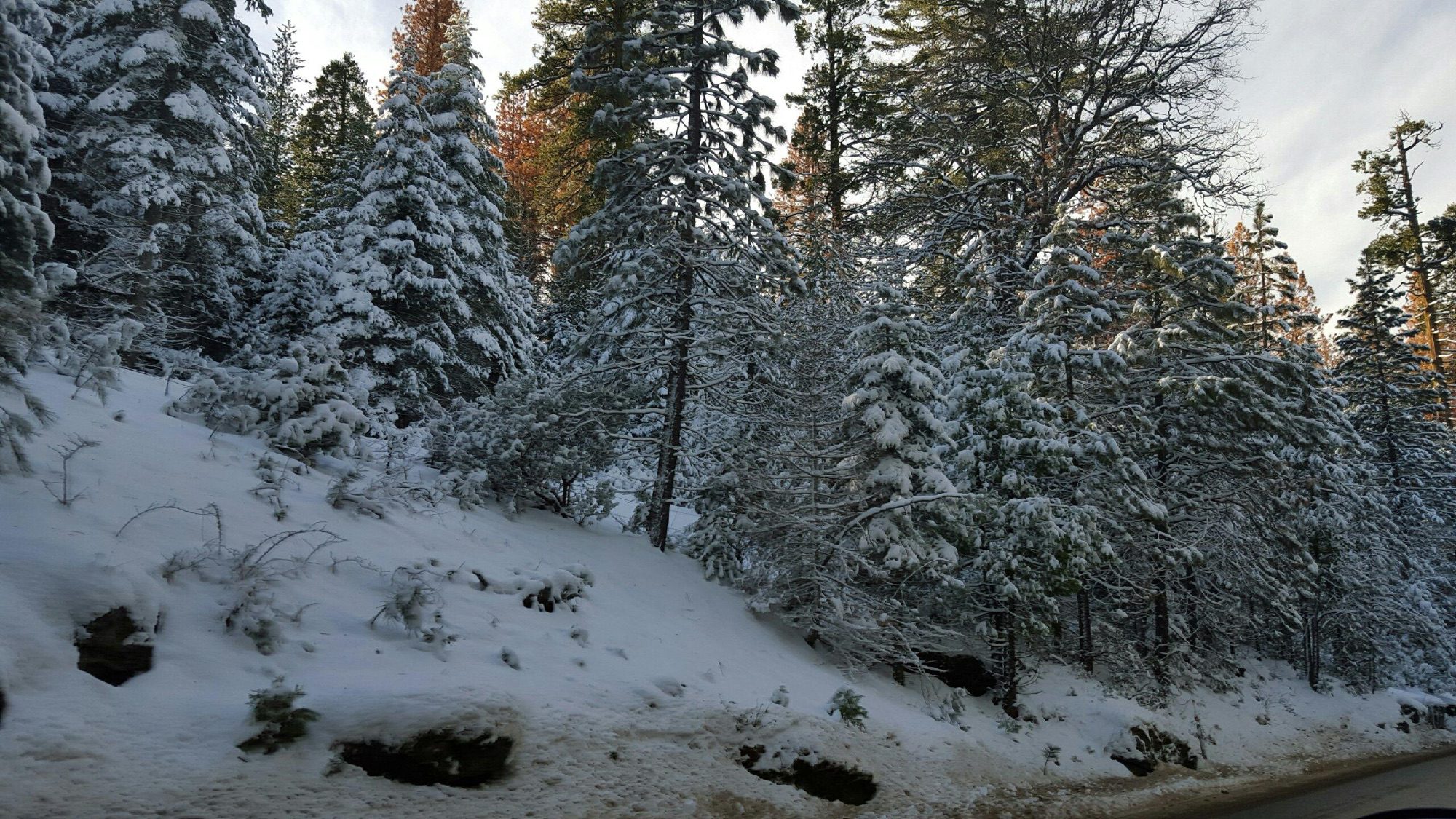
I’ve been absent for a few weeks, but I’m happy to be back! I’ve been swamped with my “day job,” which is running a nonprofit news organization. Add in the usual holiday bustle and—most exciting of all—the fact that I’ve officially completed my training to become a Minnesota Master Naturalist, and… whew! It’s been a lot.
But now that the dust (and a whole lot of snow) has settled, I’m ready to get back to what I love most: being outdoors and enjoying all the beautiful things nature offers us through every season.
It’s been under 20 degrees here lately, and the snow has now piled high enough that most plants have tucked themselves well out of reach. But winter foraging never truly stops; it just shifts. And this time of year is perfect for learning about something many people overlook: pine needles.
Yes, pine needles. Bright, resinous, filled with vitamin C, and wonderfully aromatic. And believe it or not, they’re not just for our Yule-time decor. They make a fantastic pine needle tea, syrup, or even soda (or pop, as they call it around here). But before we get to the fizzy part, let’s take a moment to understand what we’re gathering.
What Pines Can You Forage?
Pines are found in almost every corner of the United States. Whether you’re in the mountains, the Midwest, or somewhere along the coast, you’re likely to have a few nearby. And while each region has its own mix of species, several are common enough that most people will recognize them once they know what to look for.
Some of the most widespread forage-friendly pines include:
Eastern White Pine (Pinus strobus)
Soft, flexible needles in bundles of five. Mild, bright flavor. Common in the Northeast, Great Lakes, and Appalachians.
Ponderosa Pine (Pinus ponderosa)
Long needles in bundles of three and a warm, resinous scent. Widespread in the West and Southwest.
Jeffrey Pine (Pinus jeffreyi)
A close relative of ponderosa, often with a slightly sweeter smell. Found in California and Nevada, especially at higher elevations.
Loblolly and Longleaf Pine (Pinus taeda and Pinus palustris)
Tall, straight pines with long needles, abundant throughout the Southeast.
Red Pine (Pinus resinosa)
Bundles of two sturdy needles, commonly found across the Upper Midwest and Great Lakes region.
Lodgepole Pine (Pinus contorta)
Shorter needles in pairs, growing in dense stands throughout the Rocky Mountains and Pacific Northwest.
Look-alikes
Luckily, there’s only one major look-alike you need to watch for.
Yews (Taxus spp.) are toxic, including their needles, bark, and seeds. They often appear as landscaping shrubs around homes, churches, and municipal buildings, and people sometimes mistake them for pines. The giveaway is that yew needles grow individually along the stem, not in bundles. If you’re not seeing needle bundles, it’s not a pine.
Why Forage Pine Needles in Winter?
Pine needles are one of the few wild ingredients that become more interesting in winter, at least around here where the winters are harsh.
- They hold their flavor beautifully in deep cold.
- They are rich in vitamin C and antioxidants.
- They infuse quickly into teas, syrups, and sodas.
- They are easy to identify when everything else is dormant.
And perhaps best of all, it simply feels good to come home from a cold walk with a handful of something green.
Pine Needle Soda
This version is a simple, fresh infusion rather than the traditional yeast-fermented soda. The result is bright, lightly woodsy, and surprisingly refreshing.
Ingredients
• 1 cup loosely packed pine needles, chopped
• 1 to 2 tablespoons honey or sugar
• Juice of half a lemon
• Sparkling water
Instructions
Lightly chop the pine needles to release their flavor. Combine the needles, honey or sugar, and lemon juice in a jar. Pour warm (not boiling) water over the mixture and let it steep for 10 to 15 minutes. Strain into a glass, fill with ice if you like, and top with sparkling water.
A Winter Invitation
If the cold has you feeling stuck inside, pine needles are a wonderful reminder that foraging doesn’t disappear during the snowy months. There is always something to learn, something to gather, and something to make. I invite you to put on a few layers and join me in exploring.

About the Author:
Sabrina Halvorson is an award-winning journalist, author, and UMN Extension Master Naturalist. She serves as president of the Wild Ones Lake Agassiz Region seedling chapter, is appointed to the World Agriculture Forum, and was named the 2024 NAFB Farm Broadcaster of the Year. Learn more at sabrinahalvorson.com.

Leave a Reply