
Listen to this story as a two-minute radio feature:
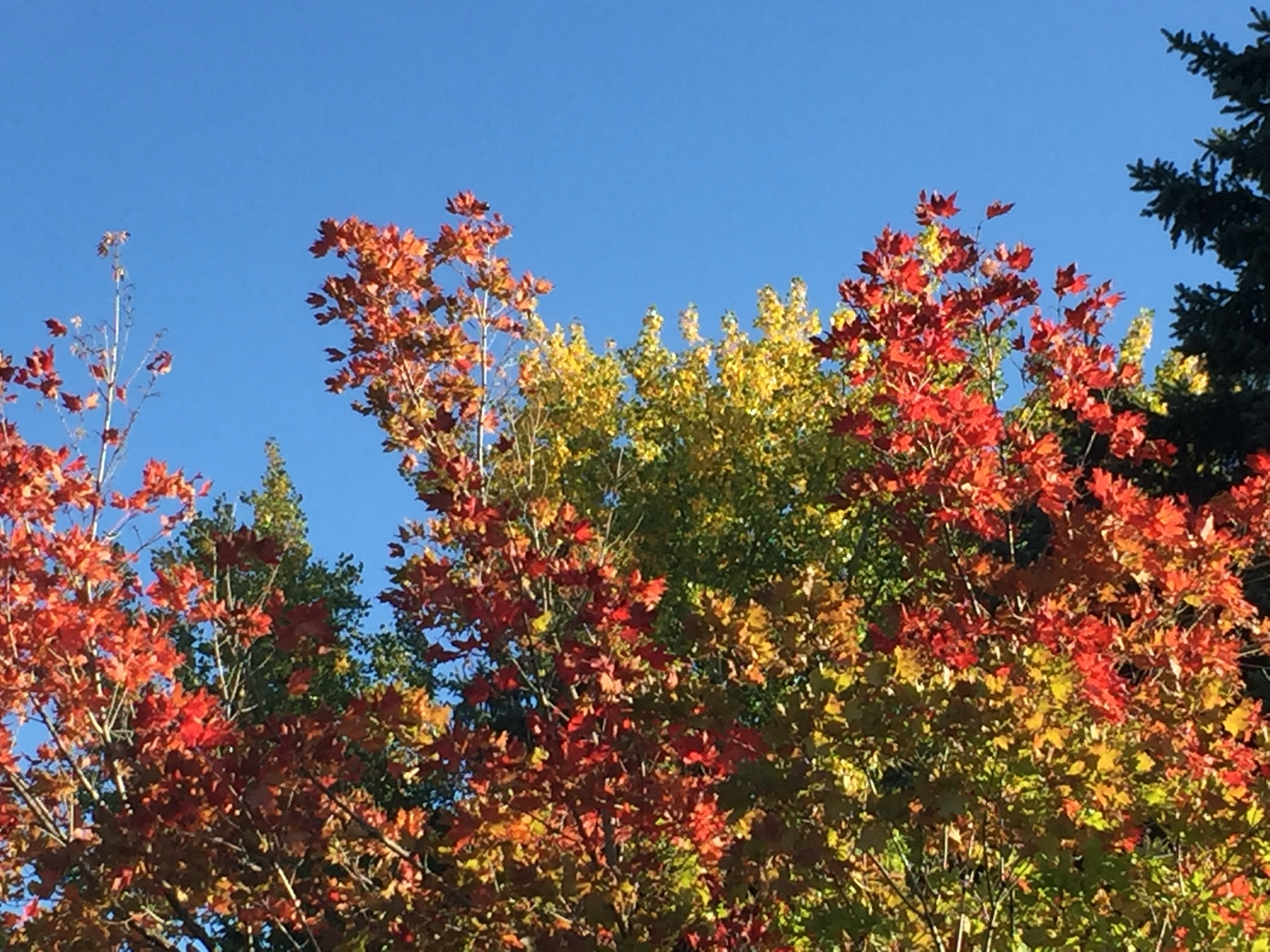
If you’ve been paying attention to the trees and shrubs lately, you may have noticed a few hints of fall. Not entire trees changing color, but a yellow leaf here, a red one there, or perhaps one branch that seems to be a few weeks ahead of everything around it.
Those early-changing leaves aren’t necessarily a sign that autumn has arrived early. Sometimes they’re telling us something about the individual leaf or the conditions the plant has been experiencing.
What happens when a leaf changes color?
A leaf changing color is part of a process called senescence, which is basically a fancy way of saying it’s getting older. It’s the final stage of a leaf’s life, but the plant isn’t just letting the leaf die.
There’s some recycling going on first.
As a leaf ages, the plant begins dismantling parts of it and moving useful nutrients elsewhere. Researchers describe this as a shift from gathering nutrients through photosynthesis to recovering and redistributing nutrients from the aging leaf.
One of the most noticeable changes is the breakdown of chlorophyll, the pigment responsible for the familiar green color of leaves.
When the green begins to disappear, yellow and orange pigments that were already present become much easier to see.
Red leaves are a little different. Many plants produce pigments called anthocyanins as their leaves age. Scientists are still studying exactly what roles these pigments play. Research suggests they can help protect some aging leaves from excessive light while the plant continues recovering nutrients, although their function can vary among species.
Why would a leaf start changing early?
Sometimes an individual leaf simply reaches the end of its useful life before its neighbors do.
Leaf senescence is also influenced by the environment. Drought, temperature extremes, nutrient shortages and other stresses can cause the process to begin sooner. Leaf age, plant hormones and environmental conditions all help determine when senescence starts and how quickly it progresses.
That’s why a few early yellow leaves don’t necessarily mean anything is seriously wrong with a tree or shrub. Plants don’t operate according to a calendar, and every leaf on a plant isn’t necessarily going to age at exactly the same rate.
Look at where the color is appearing
If you notice early color, take a moment to look at the pattern.
A few scattered yellow leaves may simply be individual leaves aging ahead of the others. If one branch is changing while the rest of the plant remains green, something may be affecting that particular part of the plant. If an entire tree is changing noticeably earlier than others of the same species nearby, its growing conditions or some type of stress may be influencing it.
That doesn’t mean early color alone can diagnose what’s happening. It’s simply another observation you can make about a plant.
And that’s one of the things I like about noticing these small seasonal changes. Instead of seeing that first yellow or red leaf and thinking only, “Fall is coming,” take another look.
The leaf may be telling you something about what it and the plant it’s growing on have been experiencing.

About the Author:
Sabrina Halvorson is an award-winning journalist, author, and UMN Extension Master Naturalist. She serves as president of the Wild Ones Lake Agassiz Region seedling chapter, is appointed to the World Agriculture Forum, and was named the 2024 NAFB Farm Broadcaster of the Year. Learn more at sabrinahalvorson.com.
Leave a Reply