
Listen to this story as a two-minute radio feature:
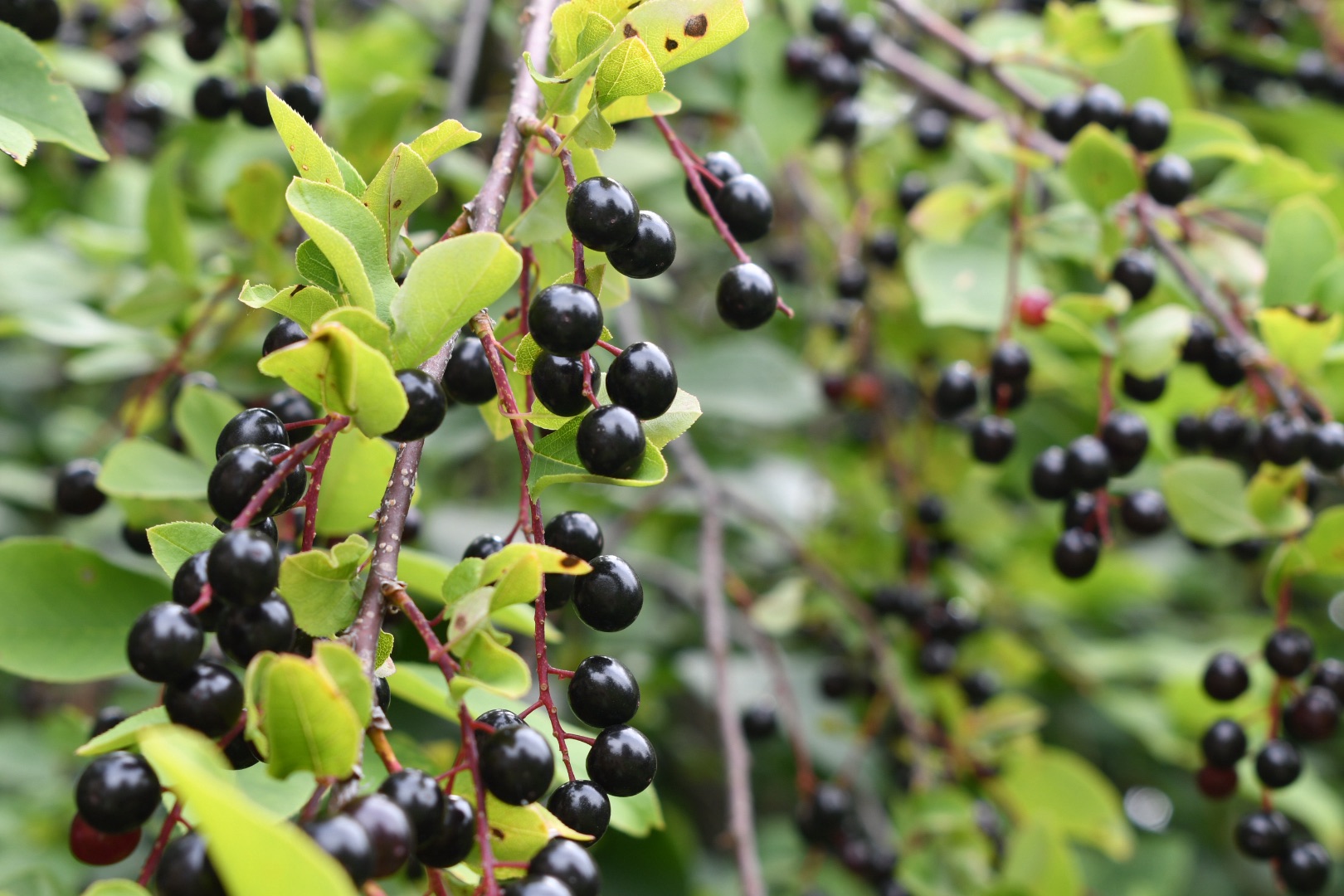
By late summer, shrubs and trees begin to fill with color. Raspberries turn bright red. Elderberries deepen to purple. Chokecherries become so dark they can look almost black, while blueberries take on their familiar blue.
Those colors are more than decoration. For many plants, they are part of the process of getting seeds moved away from the parent plant.
A berry is essentially a seed package. The plant surrounds its seeds with fleshy fruit that can attract animals. Once the fruit is eaten, the seeds may later be deposited somewhere else, potentially giving them access to new space, light, water and nutrients.
What creates berry color?
As fruit ripens, its chemistry changes. Green chlorophyll begins to break down, while other pigments become more visible or are produced.
Carotenoids can create yellow, orange and red colors. Anthocyanins can produce reds, purples, blues and very dark colors that appear almost black.
The exact color of a ripe fruit depends on which pigments the plant produces, how much of each pigment is present and the chemistry inside the fruit itself. That is why related pigments can produce such different-looking fruits, from a red raspberry to a purple elderberry or an almost-black chokecherry.
Color can signal ripeness
The timing of that color change is important.
A plant benefits when its fruit becomes attractive to animals after the seeds inside have matured. As an unripe fruit changes from green to red, purple, blue or another more noticeable color, it becomes easier for animals to spot.
Animals that eat the fruit can then help disperse the seeds through the digestive process, carrying them away from the parent plant before depositing them somewhere else.
That can reduce competition with the parent plant and with other seedlings growing nearby.
So the important part is not that a raspberry is red instead of blue. It is that the fruit changes from an inconspicuous, unripe stage into something much easier to notice once the seeds are ready to go.
The next time you see a shrub covered in bright berries, you are looking at more than a splash of late-summer color. You are seeing part of a plant’s strategy for moving the next generation into the world.

About the Author:
Sabrina Halvorson is an award-winning journalist, author, and UMN Extension Master Naturalist. She serves as president of the Wild Ones Lake Agassiz Region seedling chapter, is appointed to the World Agriculture Forum, and was named the 2024 NAFB Farm Broadcaster of the Year. Learn more at sabrinahalvorson.com.
Leave a Reply