
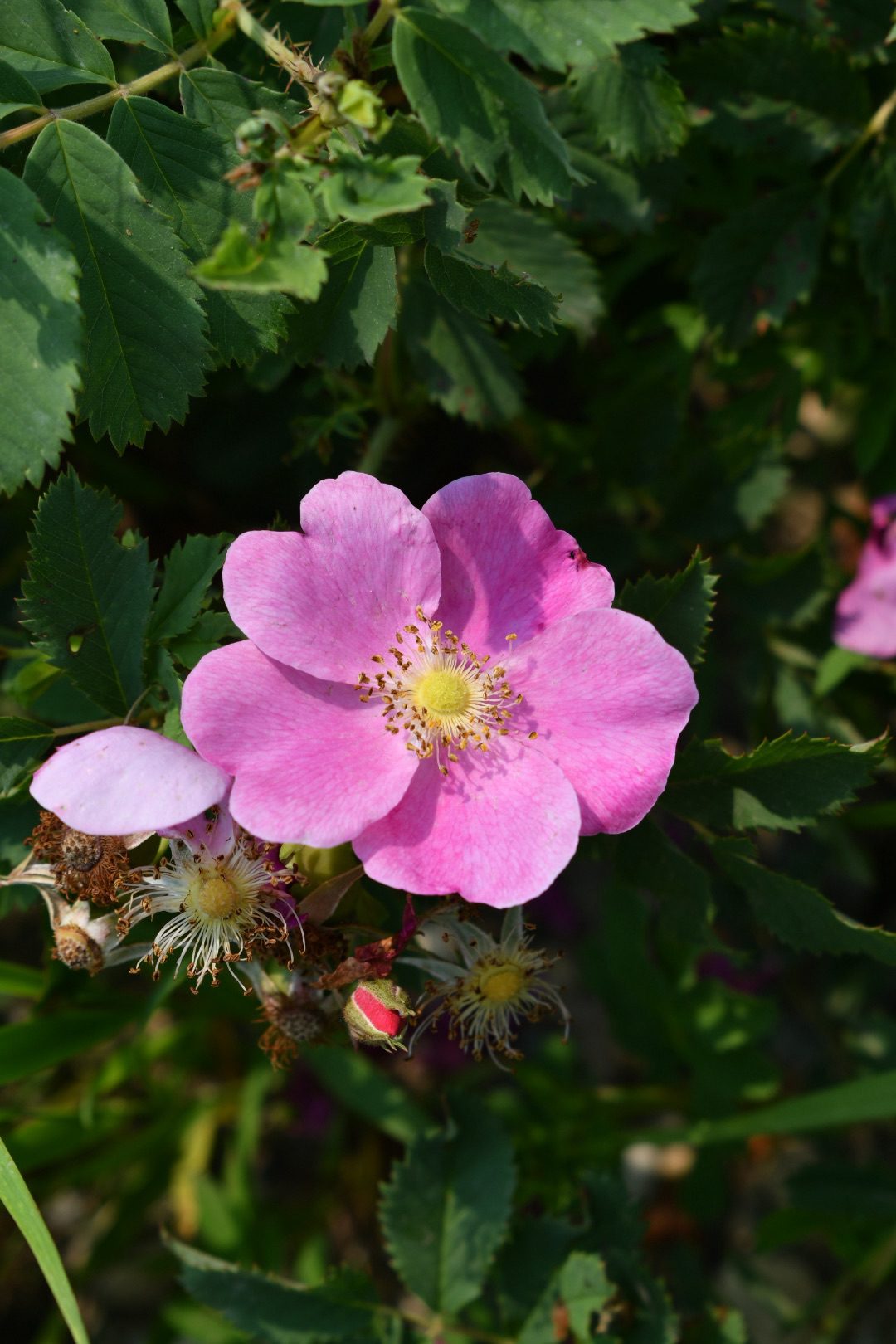
When you think of roses, you might picture elaborate gardens or trellises dripping in fragrant blooms. But out here on the prairie, we have our own wild version: the Prairie Rose (Rosa arkansana). It’s rugged, low to the ground, and a whole lot tougher than it looks. And yes, it’s just as beautiful.

I have a soft spot for Prairie Rose. Its five-petaled, pink blossoms dot the tallgrass landscape in midsummer like little gems tucked among the grasses. But Prairie Rose isn’t just for decoration. Herbalists have long used parts of the plant in teas, tinctures, and salves. The petals can be infused into honey or used to calm the skin in salves. Once the bloom fades, it leaves behind rose hips, those small, round fruits that are packed with vitamin C and make a nourishing addition to teas.
How to Identify Prairie Rose
- Grows low to the ground (1–2 feet tall)
- Five-petaled pink flowers with yellow centers
- Compound leaves with 5–9 serrated leaflets
- Found in prairies, roadsides, and open fields
Foraging Notes:
- Harvest petals when fully open but before they fade
- Rose hips (the fruit) can be gathered in late summer to fall, after flowering
- Leaves can be used in tea but are less commonly foraged
Uses:
- Petals can be infused in honey, vinegar, or used in salves
- Rose hips are rich in vitamin C; used in teas and syrups for immune support
- Traditionally used for grief, heart support, and skin healing
Look-Alikes:
- Other wild roses like Rosa acicularis or invasive Rosa rugosa
- Look for the low stature and five-petaled pink flower to confirm
Harvesting Tips:
- Always leave some flowers for hips and future pollination
- Remove petals gently by hand, or snip with scissors
- Avoid plants in areas treated with pesticides or herbicides
If you’re foraging, be gentle. Take only what you need, leave plenty of blossoms behind for the pollinators, and come back later in the season for the hips. And as always, steer clear of areas that may have been sprayed with herbicides or pesticides.
Whether you’re gathering petals for a simple skin-soothing balm or collecting rose hips for a batch of tea, Prairie Rose is a reminder of the resilience and abundance of the prairie.

About the Author:
Sabrina Halvorson is an award-winning journalist, author, and UMN Extension Master Naturalist. She serves as president of the Wild Ones Lake Agassiz Region seedling chapter, is appointed to the World Agriculture Forum, and was named the 2024 NAFB Farm Broadcaster of the Year. Learn more at sabrinahalvorson.com.
Leave a Reply