
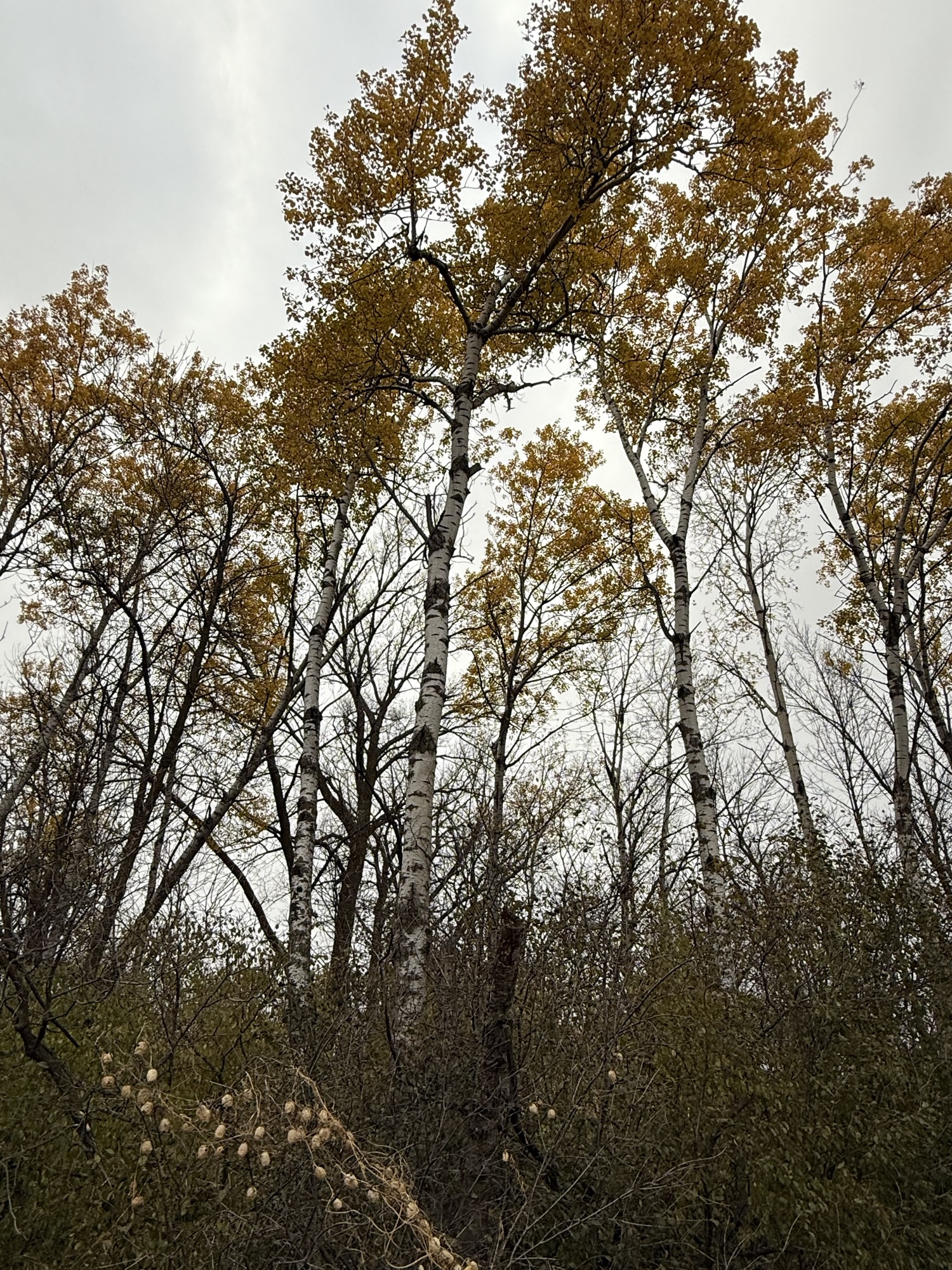
I love watching how fall progresses through my area, especially when the leaves are changing and the trees are aflame with reds and orange and yellows. But we’re at the point now where a lot of those leaves have turned brown and fallen. I still appreciate this time, crunching through the leaves on the ground, but I also notice some of the trees are still holding on to some leaves. Let’s take a look at why that is.
The leaves that won’t let go
By late fall, many trees have dropped their leaves, but some oaks and beeches still have branches full of dry, brown foliage. Even a windy day doesn’t necessarily shake those leaves loose.
This is called marcescence. It means the leaves have died but remain attached to the tree. It’s common in certain species, and there’s more to it than a tree simply taking longer to finish its autumn leaf drop.
How trees release their leaves
Trees have a process for shedding leaves. In autumn, a layer of specialized cells develops where the leaf stem meets the twig. It’s called an abscission layer and it allows cells to separate and the leaf to detach.
But for some leaves, they turn brown and dry out, but their connection to the branch remains.
According to the University of Maryland Extension, this happens in oaks, American beech, hornbeam, Eastern hophornbeam, and witch hazels.
It’s often especially noticeable on young trees and the lower branches of larger trees. That’s why a tree can have bare branches toward the top and plenty of brown leaves closer to the ground.
Do the dead leaves protect the tree?
One possible explanation involves deer and other animals that eat twigs and buds. A branch covered in dry leaves may make a less appealing meal.
Researchers tested this in a study published in Alces. They offered deer branches from European beech, hornbeam, and common oak. Some branches still had their dead leaves, while others had the leaves removed.
Deer ate more from the beech and hornbeam branches without leaves. For oak, removing the leaves made no significant difference.
So, there is evidence that holding on to dead leaves can discourage browsing, but the effect depends on the species. It doesn’t explain the behavior of every tree.
Holding leaves changes when they return to the soil
Another possibility involves the nutrients in fallen leaves.
Leaves return nutrients to the soil as they break down. Keeping them on the branches longer changes when they reach the ground. Their exposure to sunlight and weather while still attached can also affect how they decompose.
A 2023 paper in Ecosphere examines this idea alongside other possible explanations for marcescence. Researchers have found differences in decomposition, but whether those differences consistently benefit the tree is still an open question.
So, whatever the reason, it’s just another way that nature is fascinating. I hope you get to get out and experience it!

About the Author:
Sabrina Halvorson is an award-winning journalist, author, and UMN Extension Master Naturalist. She serves as president of the Wild Ones Lake Agassiz Region seedling chapter, is appointed to the World Agriculture Forum, and was named the 2024 NAFB Farm Broadcaster of the Year. Learn more at sabrinahalvorson.com.
Leave a Reply