
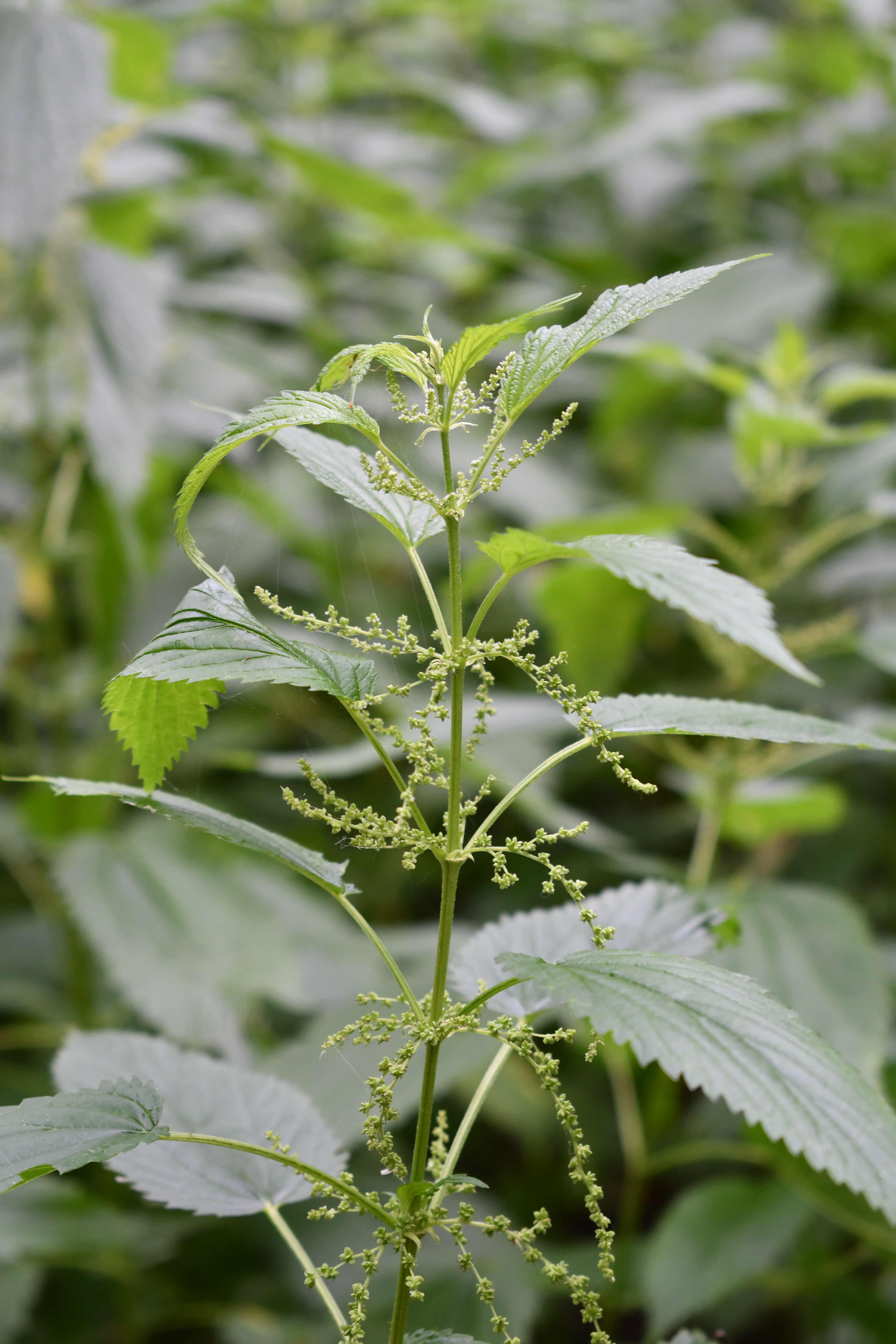
This one can surprise you with a sting if you unknowingly brush up against it, but when you know what to watch for stinging nettle (Urtica dioica) is a fabulous plant to forage.
Getting to Know Nettle
Nettle grows tall and unassuming in moist, sunny areas such as along rivers, ditches, and woodland edges. Its leaves are opposite, deeply serrated, and heart-shaped. What gives nettle its sting are tiny hairs (called trichomes) on the stems and undersides of the leaves. These hairs release histamines and formic acid when touched, which cause that familiar sting. It’s unpleasant but usually only lasts about a day. If you do get stung, you can use my plantain bug-bite remedy to heal within minutes.

Behind the sting is one of the most nutritious plants in the wild. Nettle is rich in iron, calcium, magnesium, potassium, and even a bit of protein. Herbalists consider it a nourishing tonic that supports energy, skin, joints, and overall vitality. It’s especially helpful for people who feel depleted or run-down.
Harvesting Tips
If you’re going to harvest nettle, bring gloves and scissors. And by “gloves”, I mean thick, long ones like you’d use for roses. You really want to be covered when working with nettle.
I usually snip the top 4–6 inches of the plant in spring or early summer before it flowers. You can dry the leaves for tea or cook them fresh (the sting disappears once they’re cooked or dried). Just be mindful of the area. Choose clean locations away from roadsides or sprayed fields because nettle is known to draw up pollutants in the soil.
My Go-To Summer Brew: Northern Nettle Berry Tea
This year, I’ve been enjoying nettle cold, especially on hot days when I want something that refreshes but still offers deep nourishment. This blend brings together the mineral-rich strength of nettle, the tart brightness of rose hips, the soothing softness of marshmallow root, and a fruity splash of aronia syrup.
I gave it a name and thought I’d share it with you. No, nettles don’t have berries. I’ve named it nettle berry to include the rose hips and aronia berry syrup. I really enjoy the crisp tartness of the tea. I have chronic fatigue, so I drink this in the afternoons to help with the midday slump.
Nettle can be drying for some people (I’m one), and the marshmallow root helps to counteract that dryness. The rose hips are high in vitamin C and antioxidants, and add tartness and immune support. The aronia berry syrup is high in antioxidants and is my favorite sweetener for tea.
Northern Nettle Berry Tea
A mineral-rich, gently tangy tea featuring wild nettle, rose hips, marshmallow root, and a splash of aronia syrup. Nourishing and refreshing, and perfect over ice on warm days. I drink it warm during the winter.
Ingredients:
- 1 tablespoon dried nettle leaf
- 1 tablespoon dried rose hips
- 1 tablespoon dried marshmallow root
- 2 cups water
- 2 teaspoons aronia berry syrup (or to taste)
Directions:
- Simmer the rose hips and marshmallow root in 2 cups of water for 15–20 minutes.
- Remove from heat, add nettle, cover, and steep another 15–20 minutes.
- Strain, stir in aronia syrup while warm, and chill.
- Serve over ice, optionally with a lemon slice or fresh mint.
Nettle reminds me that some of the most powerful plant allies aren’t the flashy ones. And sometimes the bristly suckers can be the most healing if we handle them carefully. I’d like to say that’s true for people, too, but at 50 years old, I’ve lost patience for the really bristly ones. Maybe that’s why I stick to plants so much.
And with that, happy foraging!

About the Author:
Sabrina Halvorson is an award-winning journalist, author, and UMN Extension Master Naturalist. She serves as president of the Wild Ones Lake Agassiz Region seedling chapter, is appointed to the World Agriculture Forum, and was named the 2024 NAFB Farm Broadcaster of the Year. Learn more at sabrinahalvorson.com.
Leave a Reply