
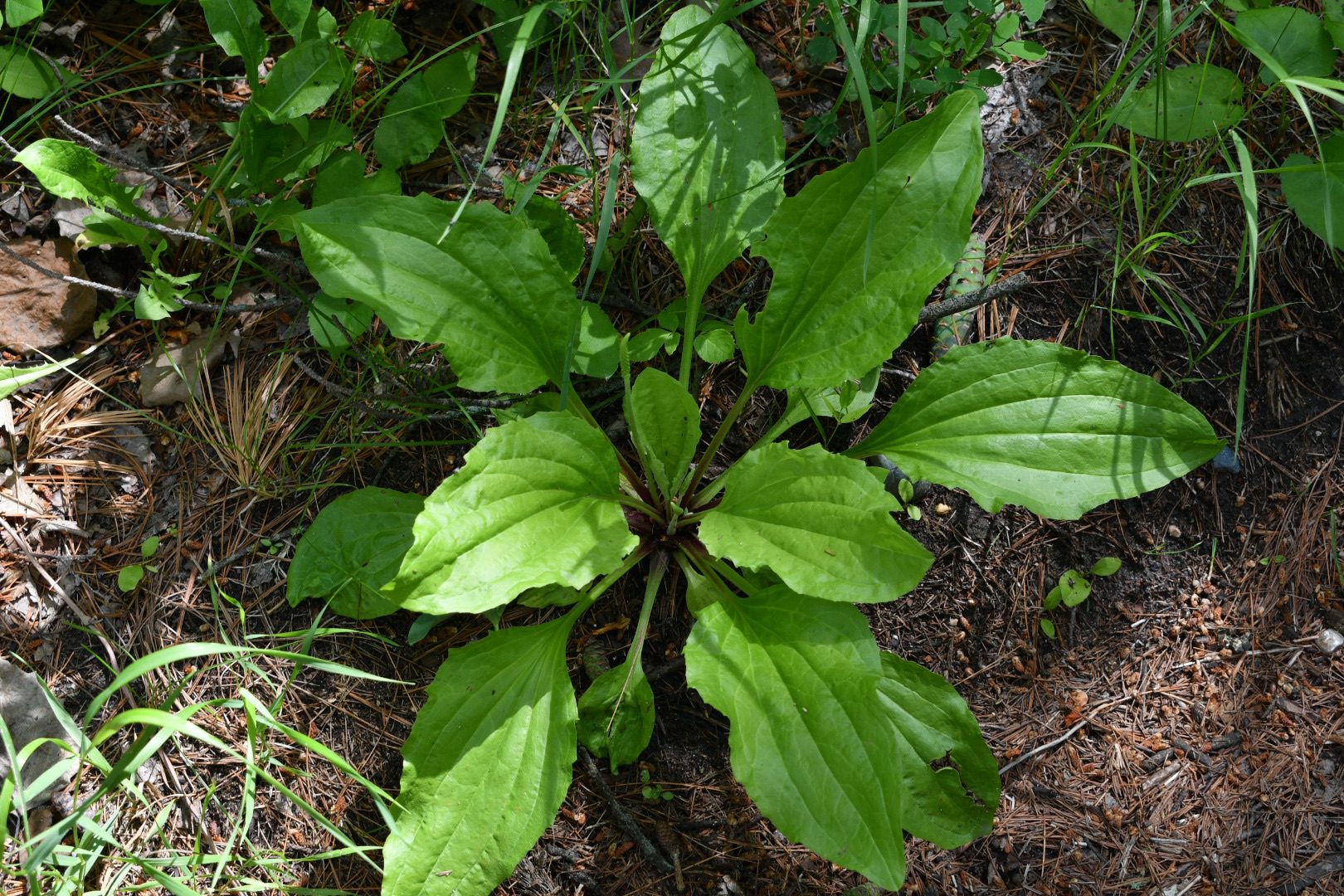
Plantain is one of my favorite plants. Here’s why.
Rusty and I had a great time yesterday walking through a wooded trail. As soon as we got out of the car, we both got right to mosquito prevention. In fact, I ended up with so much repellent on my arms, I had to wipe some off. But, I forgot about my face.
And I am a mosquito magnet.
Within minutes on the trail, bites covered my forehead. I have something called “Skeeter Syndrome” which means I get severe allergic reactions to the bites with huge, hot, red welts that hurt and last for days. Fortunately, at the start of the trail I spotted a beautiful plantain plant and had plucked one of the leaves to take home. Back at the car, I rinsed the leaf with a bottle of water, then chewed it up a bit and applied it right to my bites. I checked the smaller bites after 8 minutes and they were gone. The larger bites took about a half hour or so, but they were eventually gone as well.

What makes plantain so effective on bug bites is a compound called aucubin. It’s an anti-inflammatory and antimicrobial agent that helps reduce swelling, draw out toxins, and calm the skin. That’s why when you mash up a plantain leaf and apply it to a bite or sting, you’ll often feel relief within minutes. It doesn’t just soothe. It actively works to stop itching and speed healing.
How to Identify Plantain
There are two main types you’ll likely see: broadleaf plantain (Plantago major) and narrowleaf plantain (Plantago lanceolata). Both are low-growing plants with leaves that spread out in a rosette shape. The broadleaf version has wide, oval leaves with deep, parallel veins running lengthwise. The narrowleaf type has long, slender leaves but the same distinctive vein pattern. In late spring and summer, you’ll notice tall, skinny seed stalks rising from the center of the plant.

Where You’ll Find It
Plantain is everywhere. Seriously. Sidewalk cracks, parks, trail edges, backyards, gravel driveways. It’s native to Europe and Asia but now thrives across North America and much of the world. It loves disturbed soil and is often considered a weed, but to anyone who knows its value, it’s more like medicine hiding in plain sight.
In one of those wonderful “the Earth provides” examples, I’ve noticed that plantain seems to grow abundantly in places where the mosquitoes mass. It could also be that’s where I need it most, so that’s where I notice it most.
Other Uses of Plantain
Beyond bug bites, plantain is a powerhouse. Here’s how people use it:
- Wound care: The leaves can be used as a poultice on scrapes, cuts, and minor burns. It helps stop bleeding and keeps infection at bay.
- Digestive support: The seeds (especially from Plantago psyllium) are a gentle laxative and help regulate digestion.
- Cough relief: Plantain tea is traditionally used to soothe sore throats and dry coughs.
- Skin health: Infused in oil or made into salves, it’s great for eczema, rashes, and general skin irritation.
Whether you’re deep in the woods or just hanging in your backyard, once you know plantain, you start seeing it everywhere and it’s always good to have it on your side.

About the Author:
Sabrina Halvorson is an award-winning journalist, author, and UMN Extension Master Naturalist. She serves as president of the Wild Ones Lake Agassiz Region seedling chapter, is appointed to the World Agriculture Forum, and was named the 2024 NAFB Farm Broadcaster of the Year. Learn more at sabrinahalvorson.com.
Leave a Reply