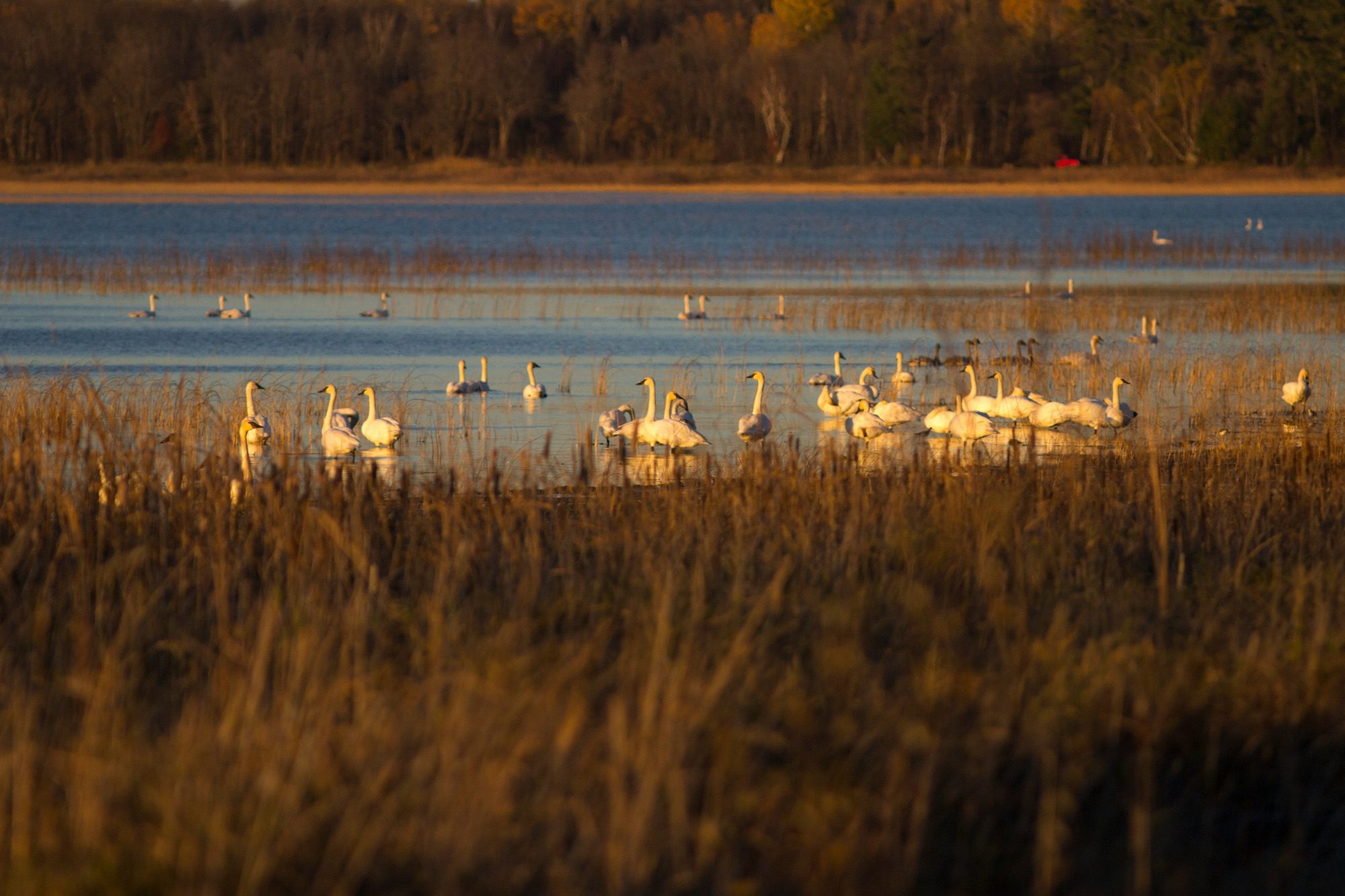
Wild rice is one of the few foods in North America that is still gathered, prepared, and eaten much as it has been for generations.
The species most commonly referred to as wild rice, Zizania palustris, is native to the upper Great Lakes region and occurs naturally in Minnesota, Wisconsin, and Michigan, as well as parts of Canada. Of those places, Minnesota has the largest remaining area of naturally occurring wild rice beds.
Wild rice is a native aquatic grass that grows in shallow lakes and slow-moving rivers. It depends on clean water and stable water levels, which makes it especially sensitive to environmental changes. In Minnesota, wild rice is regulated and protected through a combination of state law and tribal authority, with rules governing harvest seasons, methods, and access.

Since it grows in water, wild rice has been harvested for centuries by canoe using traditional knocking sticks. One person poles the canoe while the other gently bends the stalks, tapping ripe grains into the boat but leaving plenty behind to reseed the waterway.
Traditionally, wild rice was eaten fresh during harvest season and dried for storage to last through winter. It was used in soups, stews, and simple preparations that emphasized sustenance and seasonality rather than elaborate cooking.
In addition to the cultural significance, wild rice is valued for its nutritional profile. Compared with most cultivated rice, it contains more protein and fiber and provides a range of minerals and B vitamins. It is naturally gluten-free and has long been used as a sustaining staple rather than a refined grain.

Unlike agricultural grains, wild rice cannot be planted in tidy rows and harvested by machine in its natural form. Its dependence on intact lakes, shorelines, and water levels is one reason wild rice remains carefully regulated and protected in Minnesota. Harvest seasons, licensing requirements, and methods are set by state and tribal authorities to protect both the plant and the ecosystems that support it.
It’s also worth noting that not all wild rice on the market comes from natural lakes and rivers. Some wild rice is cultivated, meaning it is grown in controlled paddies, often outside the Great Lakes region, using agricultural methods similar to those used for other grains. Cultivated wild rice is still a member of the Zizania genus, but it is planted, managed, and harvested mechanically. While it offers convenience and a more consistent supply, it differs from naturally occurring wild rice in both growing conditions and cultural context.
Wild rice is still foraged today. Tribal members harvest under treaty rights. Non-tribal harvesters may gather wild rice with a permit and must follow strict rules. These protections help keep wild rice growing where it belongs.
From Water to Kitchen
Most people are introduced to wild rice not by canoe, but by way of a bag purchased at a local co-op, directly from a harvester, or even a state park gift shop, where I got my current bag. Minnesota wild rice is typically hand-harvested, parched, and finished using methods that preserve its nutty flavor and firm texture.
Not everyone has the opportunity, ability, or access to harvest wild rice themselves. Buying wild rice from licensed harvesters or local sources is still a way of supporting the people and systems that keep it growing. It allows more people to participate in the tradition in a responsible way, even if their connection begins in the kitchen rather than in a canoe.
Cooking with wild rice is one way to stay connected to those traditions without needing to harvest it yourself. Here’s the simple recipe I used this week for my turkey leftovers.
Turkey & Wild Rice Soup
A simple soup that highlights the flavor and texture of true wild rice and uses up some holiday leftovers.
Yield: 4–6 servings
Ingredients
• 1 tablespoon butter or oil
• 1 medium onion, diced
• 2 carrots, sliced
• 2 celery stalks, sliced
• 2 cloves garlic, minced
• 6 cups turkey stock
• ¾ cup cooked Minnesota wild rice
• 1 pound cooked turkey, shredded or cubed
• 1 bay leaf
• ½ teaspoon dried thyme, optional
• Salt and black pepper, to taste
Instructions
1. Heat butter or oil in a soup pot over medium heat.
2. Add onion, carrot, and celery; cook 6 to 8 minutes, until softened.
3. Add garlic and cook about 30 seconds, just until fragrant.
4. Add turkey stock and bay leaf; bring to a gentle boil.
5. Reduce heat and simmer for 10 minutes.
6. Stir in wild rice and turkey.
7. Simmer 15 to 20 minutes, until heated through and flavors meld.
8. Add thyme during the last 5 minutes, if using.
9. Season with salt and black pepper to taste. Remove bay leaf before serving.
Creamy Turkey & Wild Rice Soup
A richer variation, finished with milk for a soft, creamy texture that still lets the wild rice stand out.
Yield: 4–6 servings
Ingredients
• 2 tablespoons butter
• 1 medium onion, diced
• 2 carrots, sliced
• 2 celery stalks, sliced
• 2 cloves garlic, minced
• 4 cups turkey stock
• 1 cup milk or half-and-half
• ¾ cup cooked wild rice
• 1 pound cooked turkey, shredded or cubed
• 1 bay leaf
• ½ teaspoon dried thyme, optional
• Salt and black pepper, to taste
Instructions
1. Melt butter in a soup pot over medium heat.
2. Add onion, carrot, and celery; cook 6 to 8 minutes, until softened.
3. Add garlic and cook about 30 seconds, just until fragrant.
4. Add turkey stock and bay leaf; bring to a gentle simmer.
5. Reduce heat and simmer for 10 minutes.
6. Stir in wild rice and turkey.
7. Add milk and simmer gently for 10 to 15 minutes. Do not boil.
8. Add thyme during the last 5 minutes, if using.
9. Season with salt and black pepper to taste. Remove bay leaf before serving.

About the Author:
Sabrina Halvorson is a journalist and author by profession, herbalist and forager by passion. In addition to her journalism education, she is a University of Minnesota Extension Master Naturalist, the North Dakota chapter coordinator for Herbalists Without Borders, and a graduate of the Chestnut School of Herbal Medicine. Sabrina is the appointed U.S. Country Director for the World Agriculture Forum, an international council of agriculture experts, and the 2024 Farm Broadcaster of the Year from the National Association of Farm Broadcasters. Learn more about her journalism and agriculture experience at sabrinahalvorson.com.
Leave a Reply